
Garage door symptoms: what to describe
Movement, controls and safe observations before a repair discussion.
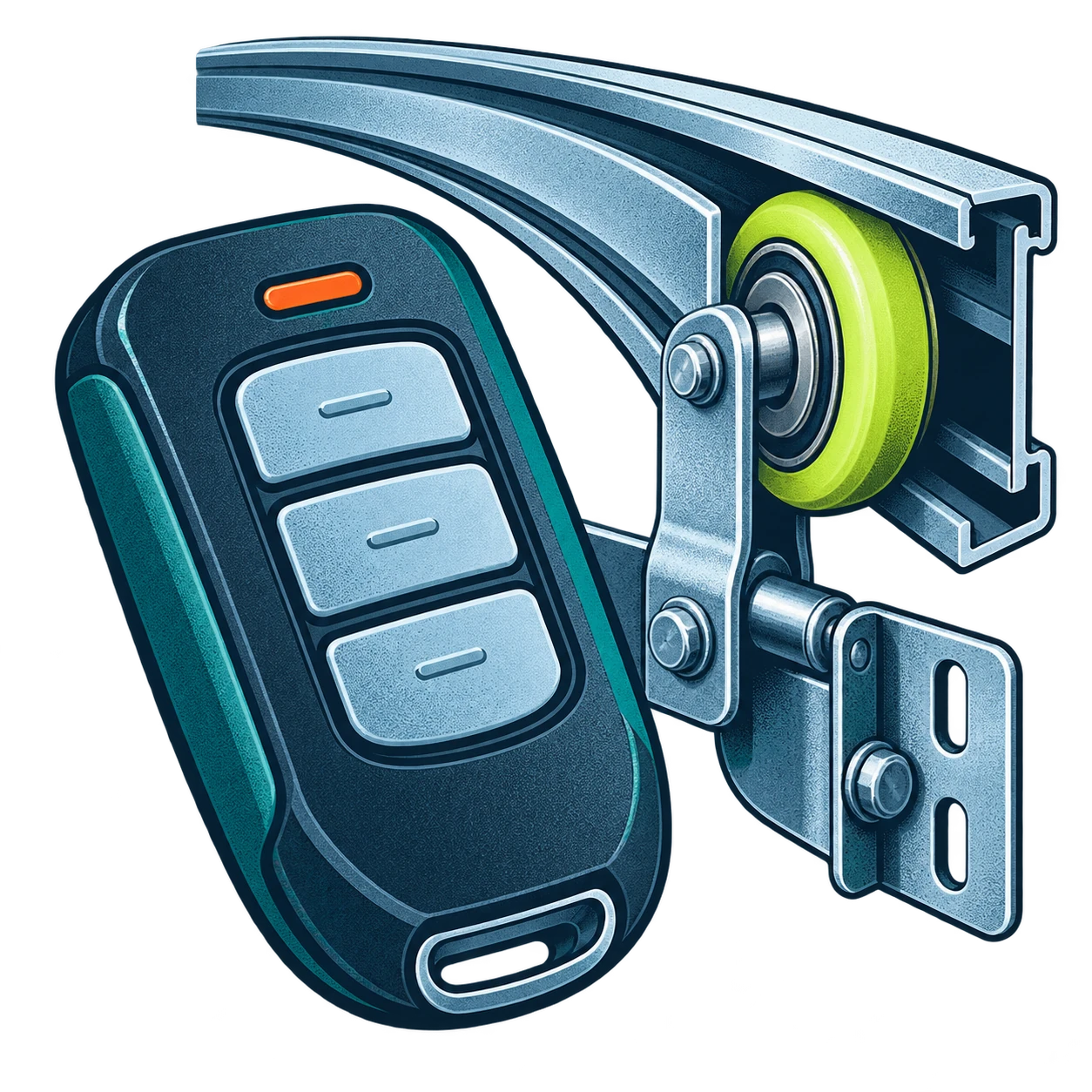
Describe position before guessing the part.
A door that stays closed, reverses after moving or sits unevenly provides different observations. Say what happened during ordinary operation and whether the condition is new. Keep people and vehicles clear of an unstable opening.
Do not repeatedly operate a visibly uneven door, go underneath it or adjust springs, cables or other loaded components. A garage door repair request can begin with your description; you do not need to dismantle anything.
Compare controls without repeated operation.
If you already observed a difference between the wall control and remote, explain it. Mention sounds, whether the motor appears to respond and whether the door moved. Do not keep cycling an unstable door to produce a demonstration.
An opener-related symptom does not by itself establish which part needs repair. Ask which door and opener systems are supported and whether parts or further assessment are included in the proposed scope.
Explain access to the garage.
Give the actual street address, driveway or garage entrance and any gate restriction. State who owns or manages the property. If another entrance can be used safely, mention that during the call.
A keyed side door is a separate residential lock question. A remote or keypad change after a move belongs on a separate handover list, explained in the moving-home guide.
Agree on what happens next.
Ask about current availability and the supported repair work. New-door installation and industrial or commercial overhead systems are not automatically included in this repair page. Confirm the system and proposed task.
The pricing page has questions about assessment, parts, estimate scope and approval for additional work. If the situation presents immediate danger, use emergency services rather than relying on an availability discussion.